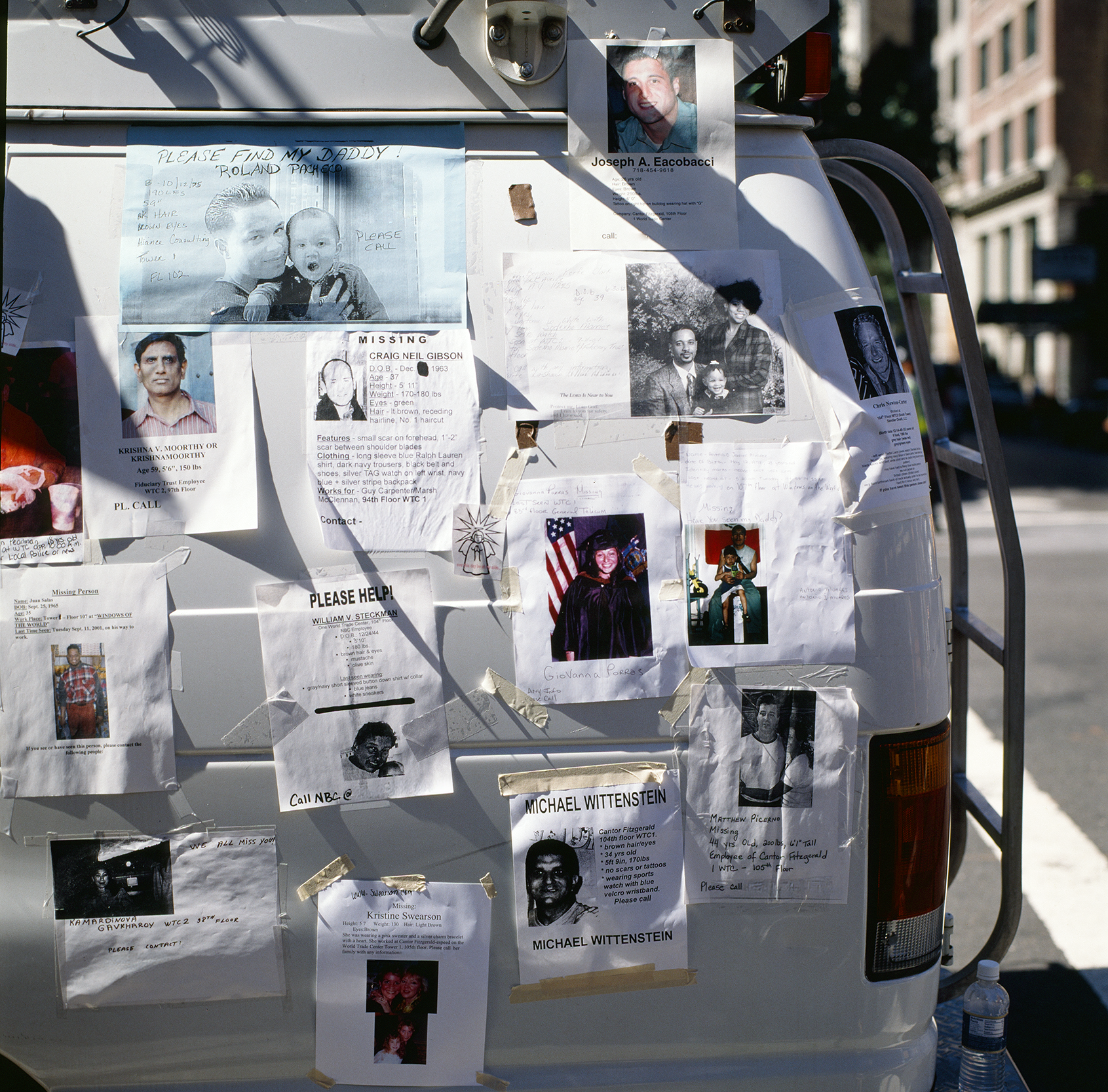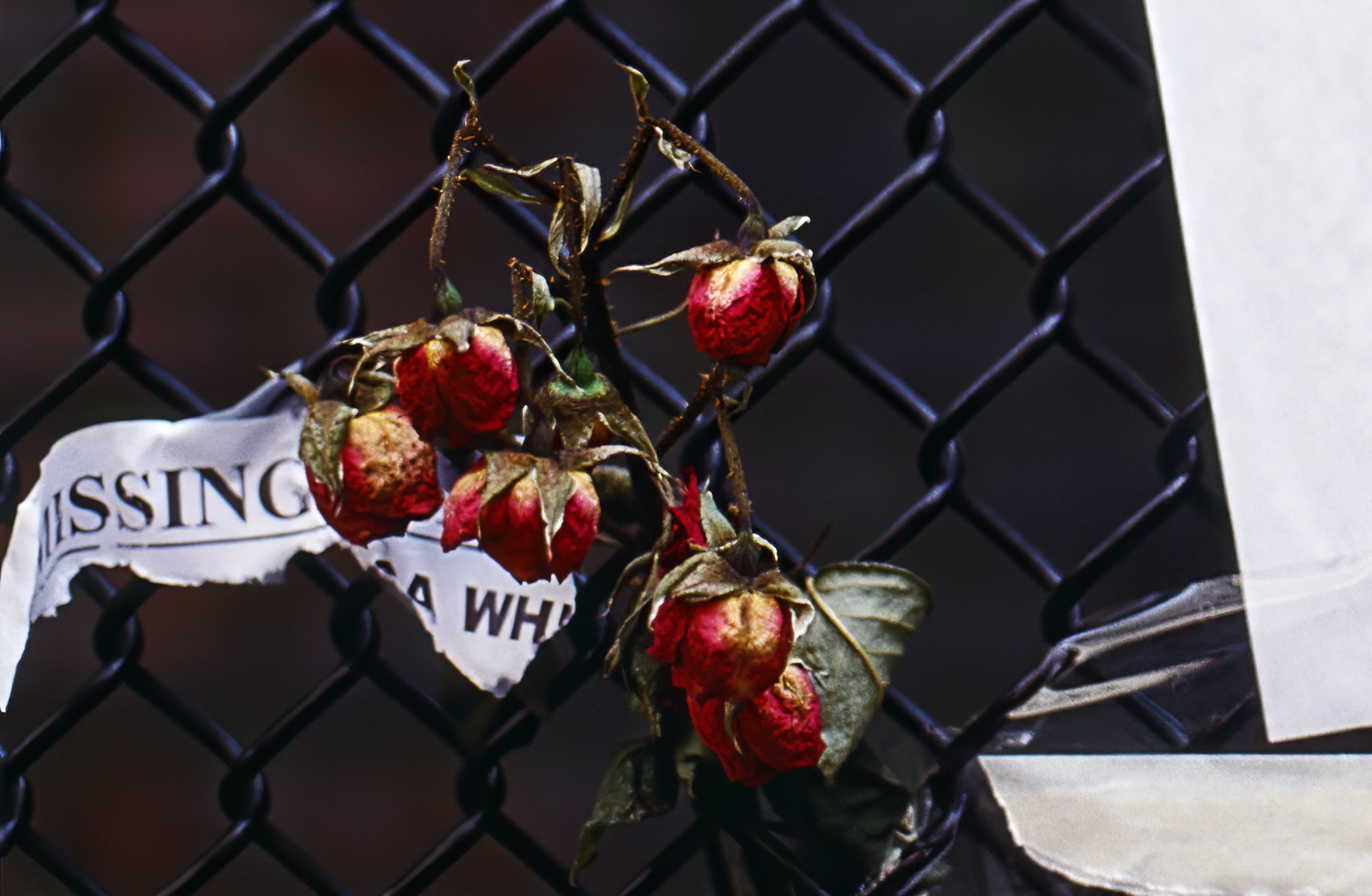

In the days after September 11, 2001, New York City spoke in paper.
Before big memorial structures and carefully chosen words, the city answered catastrophe with photocopies and tape. Faces appeared on walls, fences, subway entrances, telephone poles. They were taped at eye level, layered over one another, some crooked, some peeling. At the top, in bold or handwritten letters, a single word repeated again and again: MISSING. Small, desperate, human gestures made in moments of shock.
These posters became the first memorials of 9/11, though they were not designed as such. They remind us that a tragedy is first felt as uncertainty and absence. And they remind us that in the face of unimaginable loss, people reach instinctively for anything that can hold a life in place just a little longer. The posters may not have achieved their primary function, to reconnect, but they created pause. They turned the city itself into a site of mourning.